

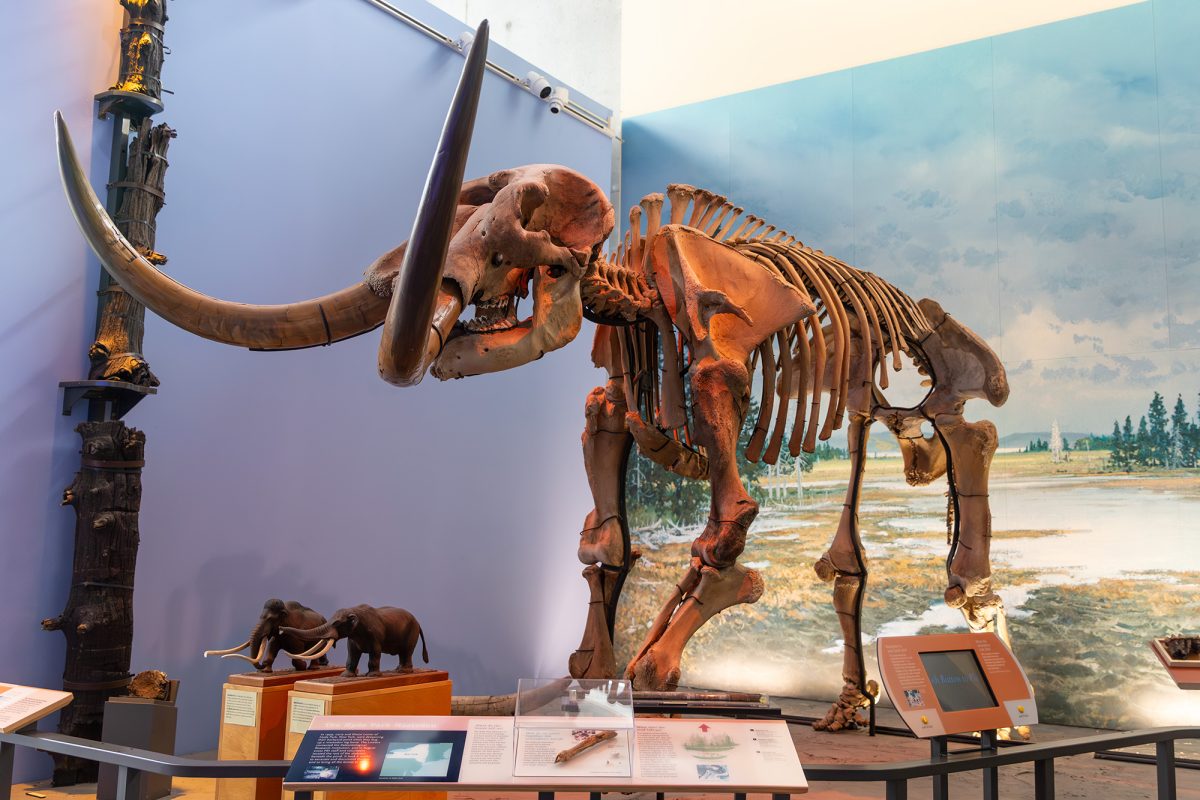
The Museum of the Earth in Ithaca has avoided a looming foreclosure after its parent organization, the Ithaca-based Paleontological Research Institute, raised millions of dollars in donations.
The museum had to pay a $3 million mortgage by Dec. 31, 2025, to remain open. The $3.7 million in donations came after the organization turned to media outlets to cover its situation and allowed the organization to avoid having to rely on unstable federal funding. Now, the organization is seeking ways to diversify funding and continue to serve both experts in the field and educate the local community.
The PRI and museum began to experience financial struggles in the fall of 2023, when a large single donor that the museum had depended on for over 20 years ceased to follow up on a promised $30 million donation. The money was set to fund the museum’s mortgage, the Cayuga Nature Center and various other initiatives.
The building remains open to visitors, often families, and has a strong volunteer force. Warren D. Allmon, director of the PRI since 1992, said donations came from around the country.
“They were people who care deeply about technical paleontology and there were people who care about collections,” Allmon said. “Several families said the same phrase, ‘you are a major part of our family.’ So we mattered for very different reasons to lots of different kinds of people.”
The PRI was originally founded in 1932 by a Cornell University professor as a place to house collections and publish high quality scientific research journals. The PRI slowly built a reputation for providing extensive programs and journals, and in 2003, under Allmon’s leadership, established the Museum of the Earth in Ithaca.
Brian Bauer, the president of PRI’s board of trustees, said that early in the pandemic, the traffic for the free resources was so great that the museum’s website was recommended alongside institutions like the Louvre and the British Museum.
The organization initially kept the issues internal, not speaking to any media outlets and letting little information out to the public. In January 2024, half of the staff was laid off and the Cayuga Nature Center was closed to outside visitors in an effort to lower operating costs. But the money continued to not come and by the end of the year, the museum had not paid its mortgage, resulting in it getting bought by a company demanding higher interest.
With the prospect of being forced to completely shut down the museum, PRI and Allmon decided to bring more public attention to their plight, speaking with The Ithaca Voice for an article about their situation.
“Within 12 hours of that story being posted on [Jan. 13 2025], the next morning, we got a phone call from a woman who said, ‘I’m sending you a million dollars,’” Allmon said. “And so suddenly that completely changed everything, because now we realized that the media was our friend, and if we embraced the media, then we could maybe get out of this.”
The Ithacan covered the museum and PRI in an article in February, alongside many other outlets. By May 2025, the PRI had received multiple million-dollar donations and the story broke into national media outlets like the New York Times by October.
“One eight-year-old wrote us a handwritten note in her handwriting that said, enclosed is $44 that I have saved,” Allmon said. “[Another] was from parents [of] a different [child], saying, ‘our eight-year-old daughter doesn’t want anything for Christmas, except for the museum not to close, here’s a gift.’”
Elinor Kops, who worked as an education intern at the museum and now helps run children’s programming on Sunday mornings, grew up in Ithaca and has been coming to the museum since she was a kid.
“I remember the fossil lab really distinctly, being able to actually get my hands on fossils,” Kops said. “I think, growing up and having this as such a profound resource really kind of ignited my affinity towards the earth sciences, and I came back here.”
As an adult, she said the PRI has given her a chance to get hands-on research experience and opportunities to interact with visitors that continue to travel to the museum.
There are also modules by the PRI for use in schools, and the museum hosts programming available to the Ithaca community, as well as research opportunities for graduate students. Though the PRI has avoided foreclosure and has enough funding to remain in operation through summer 2026, Allmon said there are still challenges to be faced, such as finding new funding partners and board members.
“We’re now pivoting to what’s next and trying to reinvent the institution at a smaller size,” Allmon said. “Still serving our basic audiences and trying to figure out how to meet all the other needs that the donor promised to fix. We’re looking for new sources of revenue and trying to take care of our staff who are exhausted … at the same time.”
Allmon and the PRI are not the only institutions dealing with these concerns. Museums nationwide have struggled to operate following the COVID-19 pandemic. A recent report from the American Alliance of Museums found that over half of museums are seeing fewer visitors than in 2019, and one-third reported a decrease in attendance in 2025.
Another challenge facing museums is the uncertainty surrounding federal funding grants under the administration of United States President Donald Trump. The same report from the AAM found that a third of museums have had government contracts cancelled, and of those, only 8% were able to fully replace the lost federal funding. The lack of funding has forced museums to cancel public programs and delay facility improvements.
Allmon said that around 25% of the PRI’s current budget comes from federal funding, and that the museum could not function without it.
“If this whole catastrophe with our donor hadn’t happened, I would be intensely worried about the future of federal funding for PRI,” Allmon said. “We can’t run PRI without federal funding, and you can’t run any natural history museum in the United States without federal funding right now.”
Despite the potential challenges still on the horizon, Bauer said he and the PRI staff are extremely grateful for the support from every donor.
“This is an improbable place, and my involvement … the involvement of people that support [PRI], can make a tremendous difference,” Bauer said. “This is a small but impactful place.”