On Dec. 19, the film adaptation of Freida McFadden’s 2022 novel “The Housemaid” was released in theaters. While the story is a satisfying piece of entertainment for those who crave gimmicky thriller novels, the adaptation fails to impress on the big screen.
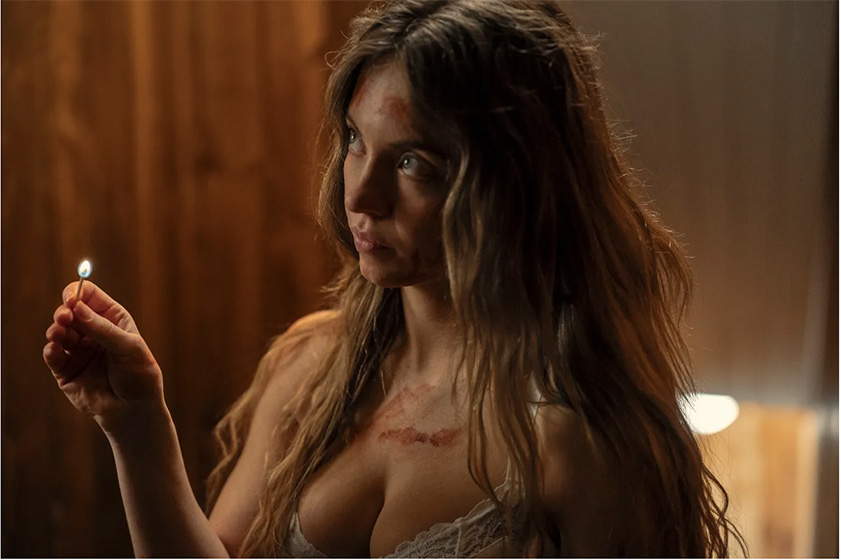
Audiences enter the world of “The Housemaid” through Millie Calloway’s (Sydney Sweeney) perspective. In desperate need of a job and a place to stay, Millie accepts a position as the live-in housemaid for upperclass Long Islander Nina Winchester (Amanda Seyfried) and her family. Initially, Millie’s new life behind the gates of the Winchester house seems too good to be true. But as Millie spends more time with Nina and her husband, Andrew (Brandon Sklenar), the illusion of perfection begins to crumble.
While the novel marketed itself as a psychological thriller, the film adaptation promised audiences a more erotic thriller with a clear focus on the tension between Sweeney’s pseudo-innocent housemaid and Sklenar’s married man. Sklenar flexes his acting muscles in his performance as Andrew, tricking the audience with his perfect husband facade. Sweeney is at her best in the romantic scenes with Sklenar, embodying a flirty persona that is far more interesting and believable than the rest of her performance as Millie.
However, Sweeney pales in comparison to Seyfried’s portrayal of Nina. Throughout the film, Seyfried plays a game of tug–of–war with the audience; just when she has won the viewer over to her side, her manic and crazed treatment of Sweeney brings the audience back to hating her. Seyfried nails the range of the complex character from relatable suburban mom to unstable and cruel boss to jealous wife and back again.
The opening of “The Housemaid” does nothing to set the tone of the film. As a bland pop song plays, Sweeney drives a car through the Long Island neighborhood that serves as the film’s setting. The scene represents most of the first hour: scenes setting up necessary information without developing characters or pushing the audience to the edge of their seats.
Screenwriter Rebecca Sonnenshine revives “The Housemaid” from its fatal pacing flaws during the final half of the 2 hour film. When Millie finds herself in a dangerous situation with Andrew, the film shifts from the present day Winchester residence and Millie’s perspective to Nina’s. In a letter written to her daughter Cecelia (Indiana Elle), Nina connects the fragmented secrets that Millie discovered. The letter starts with the cliche “if you’re reading this, I am probably dead” and details the truth of Nina and Andrew’s seemingly perfect marriage.
Nina’s letter conveys some of the film’s most shocking moments. However, the voice-over narration and story-within-a-story setup makes this part of the film feel out of place. Seyfried’s voice-over is a jarring reminder to the audience that they are watching a movie, just before the highly anticipated climax of the film.
Like the cliche start to Nina’s letter, “The Housemaid” leans too far into tropes of the psychological thriller drama to feel fresh. The cinematographer, John Schwartzman, took every opportunity to show a character through a window or door frame, foreshadowing the confined nature of the climax. By the fourth time the camera trick is implemented, it stands out against the otherwise uninteresting visual choices.
Despite the average visuals and unimpressive soundtrack, “The Housemaid” delivers on one important aspect of the thriller genre: entertainment. Directed by Paul Feig, most well known for directing the 2011 comedy “Bridesmaids,” “The Housemaid” is riddled with moments of humor. But with comedic timing that seems to always fall within a high tension moment, Feig blurs the line between comedy and dramatic thriller too frequently. Several of the film’s climactic scenes leave audiences thinking “was that supposed to be funny?”
At the end of “The Housemaid,” the credits smash onto screen to Taylor Swift’s “I Did Something Bad” after a tailpiece scene setting up Millie’s next employment opportunity — and Feig’s greenlit sequel. The attempt at a tongue-in-cheek credit tune is the last way that “The Housemaid” attempts to establish a genre before releasing its viewers back into the real world.