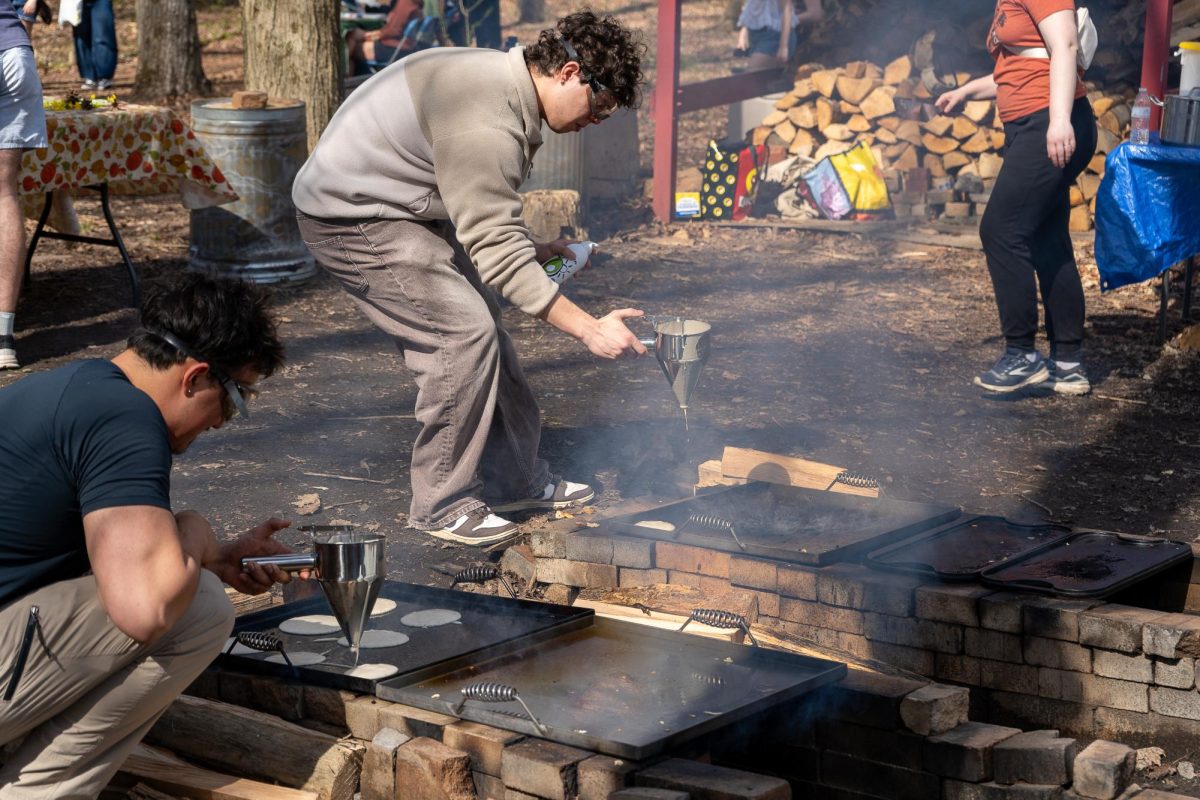

When Denise O’Leary ’17 thinks of comfort food, she pictures a warm and nostalgic bowl of tomato soup.
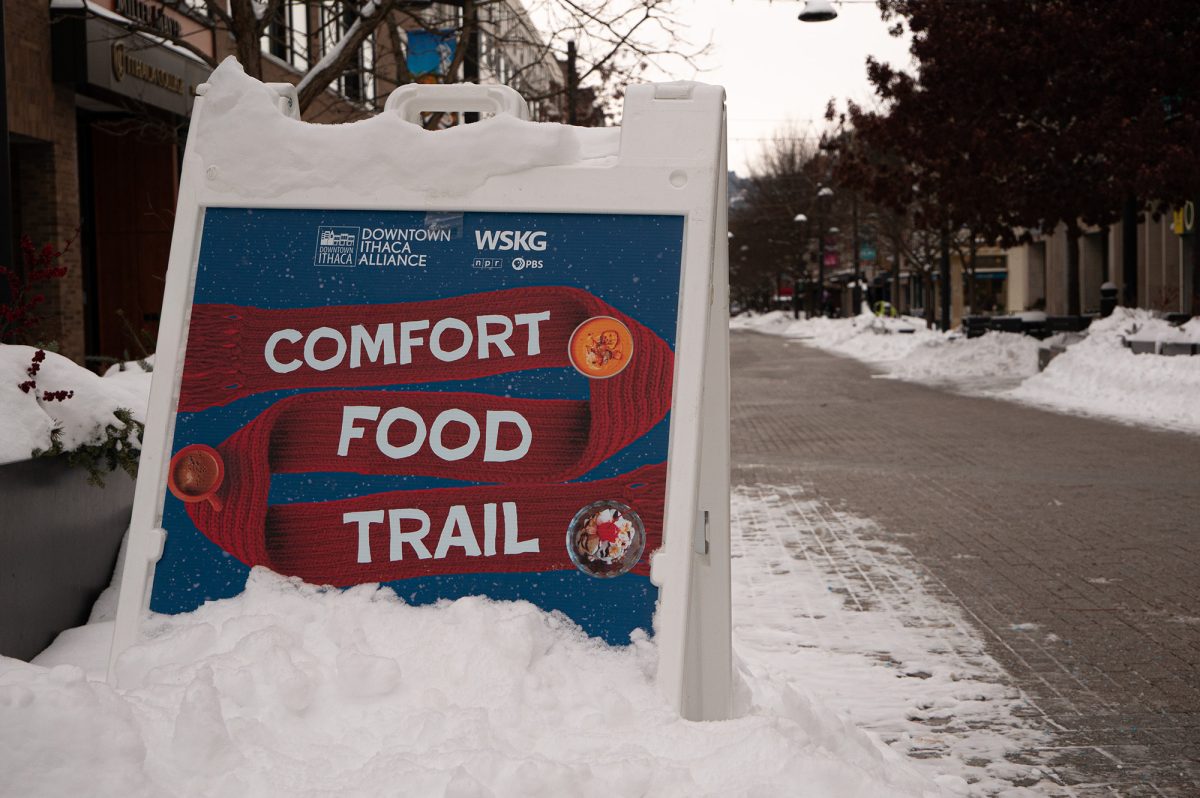
As head chef and co-owner of Cafe DeWitt, O’Leary is uniquely situated to share this experience with the world, one locally sourced meal at a time. In January, as temperatures slip lower and lower, restaurants like Cafe DeWitt struggle to find customers. But this year, Cafe DeWitt is one of 19 establishments participating in the second annual Comfort Food Trail. The initiative, which takes place from Jan. 16 to Feb. 1, aims to introduce customers to new establishments and boost business for downtown restaurants during what owners say is their slowest time of year.
The Downtown Ithaca Alliance, a nonprofit supporting local businesses on The Commons, helped coordinate the event. The organization serves the business improvement district, a 22–block area of downtown, where any property in the area pays extra taxes to support the local economy. Zoe Zirini, project manager at DIA, said the group partners with every business within the district, inviting them to participate in events such as the Comfort Food Trail or the Ithaca Apple Harvest Festival.
“There’s always a lot of discourse about, ‘Oh no, this restaurant closed, and I loved it, and I supported it,’” Zirini said. “So [the Comfort Food Trail] is one more way to get people into these restaurants. … You might know some of them and have been to some of them, and love a couple of the ones on the list, but this is a great chance to try new ones. And then the more food you try, the more you’re like, ‘Wow, that was amazing. It was a really reasonable price. I’m gonna go back again.’”
Phillip Chorba, maître d’ at the Food Lab Kitchen and Bar, said that the Comfort Food Trail introduces the restaurant to people who otherwise might never have known it existed.
“It’s a whole group of people that I didn’t know were out there,” Chorba said. “We’ll see new faces, and they’re just really into it. … It’s something that I was surprised by as a semi-recent transplant to the area.”
Like Chorba, the Comfort Food Trail is relatively new to Ithaca. For years, Zirini said, the DIA ran the Chowder Cook-Off in January and Chilli Cook-Off in March. The events brought business to the downtown area during a sleepy time, but were taxing to restaurants. Both cook-offs required restaurant workers to produce large quantities of food, and then stand outside in the cold selling their creations.
“Everybody loved both events,” Zirini said. “The food is always delicious. It’s a very fun culinary event, but it’s a lot to ask of restaurants and nonprofits.”
In 2023, following a change in management, the DIA ended the Chowder Cook-Off, focusing their energy fully on the Chili Cook-Off. Zirini said that while this pivot felt necessary, it left a gap in programming for the month of January, one of the lowest times for foot traffic. With college students gone for much of January and the cold weather discouraging locals from leaving the house, businesses suffered.
“We wanted to do something to support our downtown restaurants and still have some kind of culinary excitement,” Zirini said. “So what was born was the Comfort Food Trail.”
A major draw for Comfort Food Trail travelers is the prizes. Locations featured on the Comfort Food Trail have QR codes, which customers can scan to enter a raffle for a DIA gift card. Participants have a chance to win a $50 gift card each week, or the $150 Grand Prize drawn at the end of the trail. Each establishment on the trail also chooses to highlight a different comfort food dish on its menu, which comes with an extra raffle entry. The specialties range from Hound and Mare’s $3.75 hot cocoa that the website claims will taste “like your childhood” to $37 short rib from Simeon’s American Bistro. The range of options illustrates the range of ways the phrase “comfort food” can be interpreted.
“[The definition of comfort food] is inherently subjective, which is the very nature of taste itself,” Chorba said. “To me, it’s something that could have been made by my grandma.”
In the darkest time of year, Chorba said that it is important to embrace small joys. He cited Hygge, a concept imported from Scandinavia that reflects a feeling of relaxation and contentment — like curling up by a fire after a long, cold day.
For O’Leary, the business brought by the Comfort Food Trail is its own form of release.
“In December, it’s one of our busiest months of the year, with all the holiday sales,” O’Leary said. “January hits, and I suddenly don’t have enough income coming in to pay for our employees or enough tasks for them to do. Our business is cut in half compared to those later winter months. We’re just struggling and scraping by to pay our bills, pay for food and our people, and still have work for them to do. And so in having these events, there is something to do, there’s something to look forward to, other than standing around and hoping that people will come.”
O’Leary said she would like to see more IC students visiting The Commons and participating in events like the Comfort Food Trail.
“As a student, I didn’t really come downtown that much until my later years,” O’Leary said. “But there’s stuff to do, and I care about that. I want to see some IC folks around here.”
Luring customers from the comfort of their homes to the comfort of downtown storefronts is a daunting task. Still, O’Leary seems determined.
“They’re staying cozy at home,” O’Leary said. “But we’re trying to encourage them to be cozy here.”