
Editor’s Note: This is a guest commentary. The opinions do not necessarily reflect the views of the editorial board.
Tragedy can strike like a lightning bolt smashing around you out of a seemingly cloudless sky. You go about your day, sitting, say, with a cup of tea on a sunny Thursday morning in your favorite coffee shop when the dean calls with news of your student’s death, and you spend the next 20 minutes pacing outside, crying, calling your wife, your sister and wanting to call every loved one you have to make sure they are OK. Grief can simply overload your circuits.
For many students at Ithaca College, this last week has been either the first death of someone close to them or at least one of the first. I am 60 years old, and as you age, you accumulate a list, for we do not live our lives without a growing number of scars tattooing us: grandparents, parents, a cousin who was taken too soon. And then there is the one that surprised us all: at 20 (in 1985), my closest friend died on the highway coming back from college.
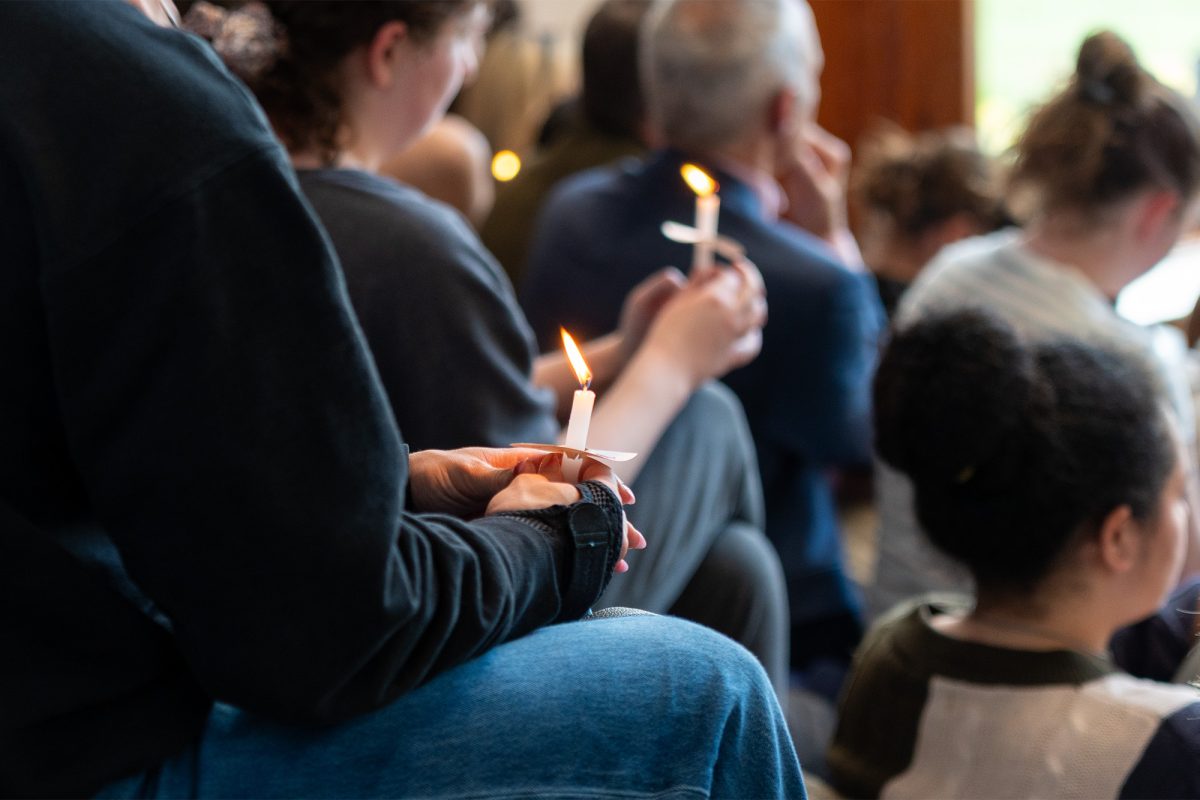
One would imagine that such experience with loss would lead me to some wisdom I could share. I searched. And searched. I wanted to speak up at the memorial service, to offer a packed room of sweet young people in such pain something to ease their hurt. But I had nothing, and that service completely overwhelmed me again. The words shared from his parents, friends, girlfriend; the laughter of recognition scattering through the room as Everett Joseph Moore’s smile, his smarts, his musical talent and the way he could light up a room resonated between every speaker and everyone listening (and crying).
Grief is an emotion: it is not sensible. It is not organized or logical; it has no regular pattern. One minute you can be feeling “normal” and another, you are a mess, weeping or completely cold and shut off to the world. You want to be alone; then you want to be with others who are grieving; then you want the impossible of both at the same time. You never want to eat again; then you are famished.
My friend died in 1985 because a Semitruck smashed into his car. What has my grief and loss made me feel? Everything: from anger to hopelessness to wistfulness at how great it was that I knew him; grief makes no sense, and it shakes us about.
But what is the alternative to grief? Not caring?!? “Living” our life in such a hollow way that no loss could ever touch us? I believe it is an African proverb that I love so much: “When death comes to find you, may it find you alive.”
Grief is a flip side, a cost, of living a real life with actual feelings and meaningful connections. We all will have moments of loss scattered throughout our lives, giving us the scars we will carry. Over time, we will look on those scars with a melancholic, wistful fondness: these are the people I have loved, I have cared about, that I carry with me.
We cannot live; we cannot make this all-too-brief time we are spending exploring what it is to be a human being, without grief being a part of the story.
When that happens, it is right, perhaps even righteous (if you can bear that word) that a person, when they die, leaves a hole. That their loss marks us, that they meant enough that those most close to them hold a scar somewhere close to their heart.
My friend who died in 1985 was named Mark Melchert, and in one of those weird parallels that happen every so often, he was, like Everett, an amazing guitar player who went to a college (Oberlin College) with a terrific music school, but ended up majoring in something else.
I have a few recordings of Mark playing guitar, and when I hear them, I still can cry, but it is different now, 40 years on: tears of recognition, of remembering, of how much I loved that man, of how much he meant to me. A recognition that he lived.
Life has so many joys, wondrous times of connection and growth; times when our hearts seemingly expand in our chests. Life offers us a chance, over and over, to feel connected to the world and to each other, to know that you are alive, to know that you matter.
But none of us escape this crazy experiment of living without that flip side: the scars of loss and grief; scars which we learn to love, for they become us, and we would never want those scars to go away.
Those who can, I urge you to save a recording of Everett. It might be too hard to listen to right now — that scar is quite tender and will be for some time — but later, in a month or a year or 20, hearing Everett again might offer you something beautiful: connection to someone you knew, who meant something to you, and who you long to remember. He was here, with me, and he mattered. A remembrance that he lived.