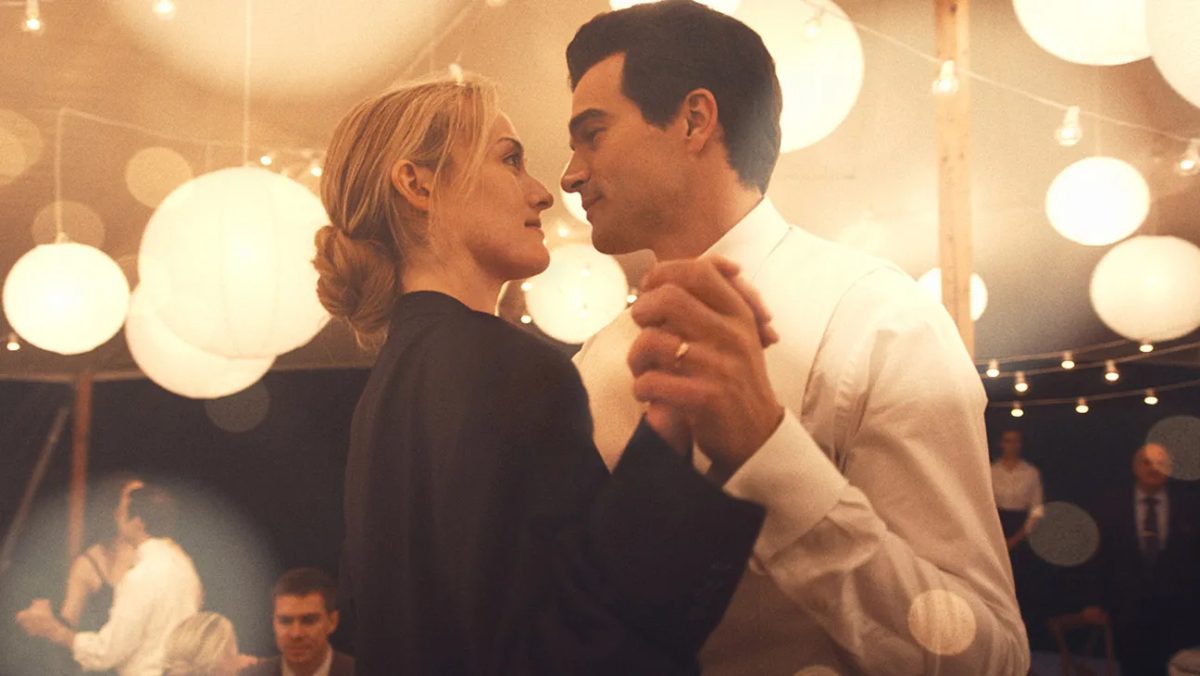


“Regretting You,” based on the bestselling romance novel by Colleen Hoover, arrived in theaters Oct. 24 to the anticipation of many of Hoover’s fans. However, while full of drama and surprises, the film lacks the emotional sincerity that Hoover has come to be known for.
Hoover has seen an explosion of popularity in recent years. Her books have sold over 20 million copies, and in 2022, she held six of the 10 spots on the New York Times’ paperback fiction bestseller list. With such a massive following for her books, it is no surprise that so many of them are being adapted into movies. “Regretting You” is her second film adaptation, with two more of her works slated for release in 2026.
The movie follows Morgan (Allison Williams), whose life is turned upside-down after a car crash kills her sister Jenny (Willa Fitzgerald) and her husband Chris (Scott Eastwood). When it is revealed that the two were having an affair, she must navigate the situation alongside Jenny’s partner Jonah (Dave Franco) while trying to rein in her daughter Clara (Mckenna Grace), who has been acting out since her father’s death.
One of the biggest weaknesses in “Regretting You” is its script, written by Susan McMartin. The movie is full of repetitive language and situations, and the conversations between characters sound stilted and unrealistic. The script affects the way characters interact and how their relationships are portrayed, resulting in an emotional disconnect between the audience and the film. For example, despite the movie telling the viewer that Clara was close with her father, there are no scenes that support this while he is alive. In fact, the two barely have a conversation together in the movie. Instead of being portrayed as the loving, supportive figure he is said to be, he is shown in the beginning of the movie to be strict towards Clara, and encourages Morgan to punish her.
The movie explores numerous serious topics, including loss, infidelity and tense familial relationships, but the way these issues are addressed fails to provide the audience with a means to connect with the characters in their situations.
While the actors aren’t given much to work with in terms of the movie’s script, some portrayed their characters better than others. Sam Morelos stands out as Lexie, Clara’s spunky best friend who is put into some awkward situations amid the drama between Clara and her mother. Mason Thames delivers a compelling performance as Miller, the “most popular boy in school” who has harbored a longtime crush on Clara. While Thames and Grace’s real-life relationship aids the chemistry between their characters, Grace’s performance beyond that feels one-dimensional and does not compare to her other work, such as “What We Hide” (2025).
The movie’s pacing feels jarring and disjointed, with no clear storyline throughout and a seeming confusion as to whether it should focus more on Morgan or Clara. While the mother-daughter duo’s relationship is supposed to be central to the story, for the first hour of the movie, they have little interaction beyond Morgan repeatedly yelling at Clara to go to her room. Their relationship is hastily mended in a scene during the last few minutes of the film, but fails to hit on the emotional climax that the viewers are led to expect.
After an hour and a half of montages and repetitive sequences, it seems as if all the conflict is brought about and resolved rather quickly — especially when it comes to Clara and Miller’s relationship. They have a mild argument where Miller accuses Clara of using their relationship to make her mom angry, which is swiftly resolved. Their main conflict comes when Clara reveals she was accepted into her dream college, while Miller is still on the waitlist at the same school. This conflict felt flat and less thought out, and it may have been more interesting to scrap this plotline in favor of further exploring Clara taking advantage of Miller as an act of rebellion.
Another flaw throughout the movie is its very clear use of product placement. The constant focus on Jolly Ranchers and the several scenes set inside AMC Theaters make many scenes feel like advertisements. There is a lack of subtlety that often distracts from what the scenes are trying to convey.
Despite its many flaws, one of the movie’s strongest elements is its use of humor. In a film with such dark subject matter, it was an unexpected surprise that ended up working in its favor overall. The actors are all at their strongest when given more lighthearted material, and adding more of it throughout the movie definitely could have strengthened it.
Overall, while the movie was able to bring in some big stars, even they cannot make up for its poor production quality and story. Between the negative reception of “Regretting You” and the controversy surrounding the making of “It Ends With Us,” Hoover’s first page-to-screen adaptation, perhaps it is time to retire her books from the adaptation stage.