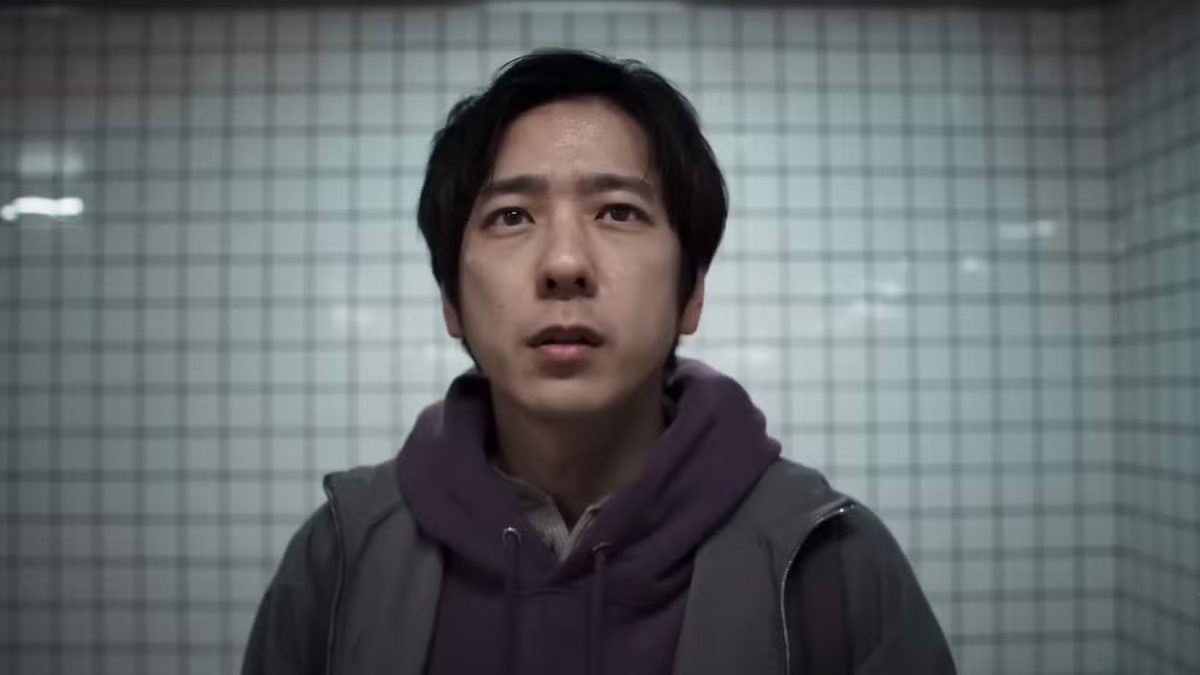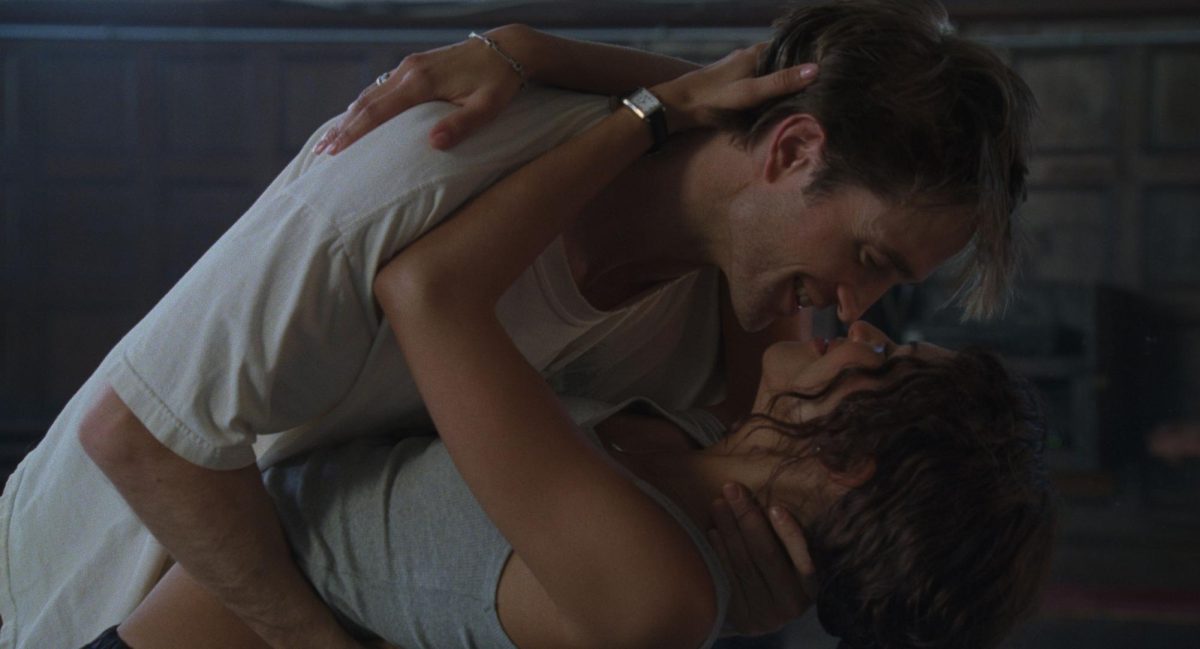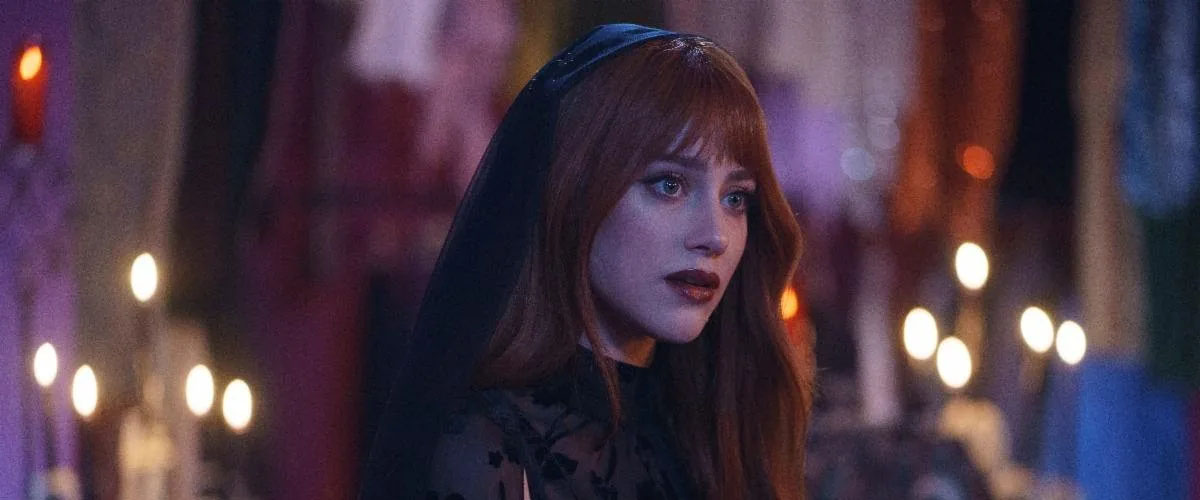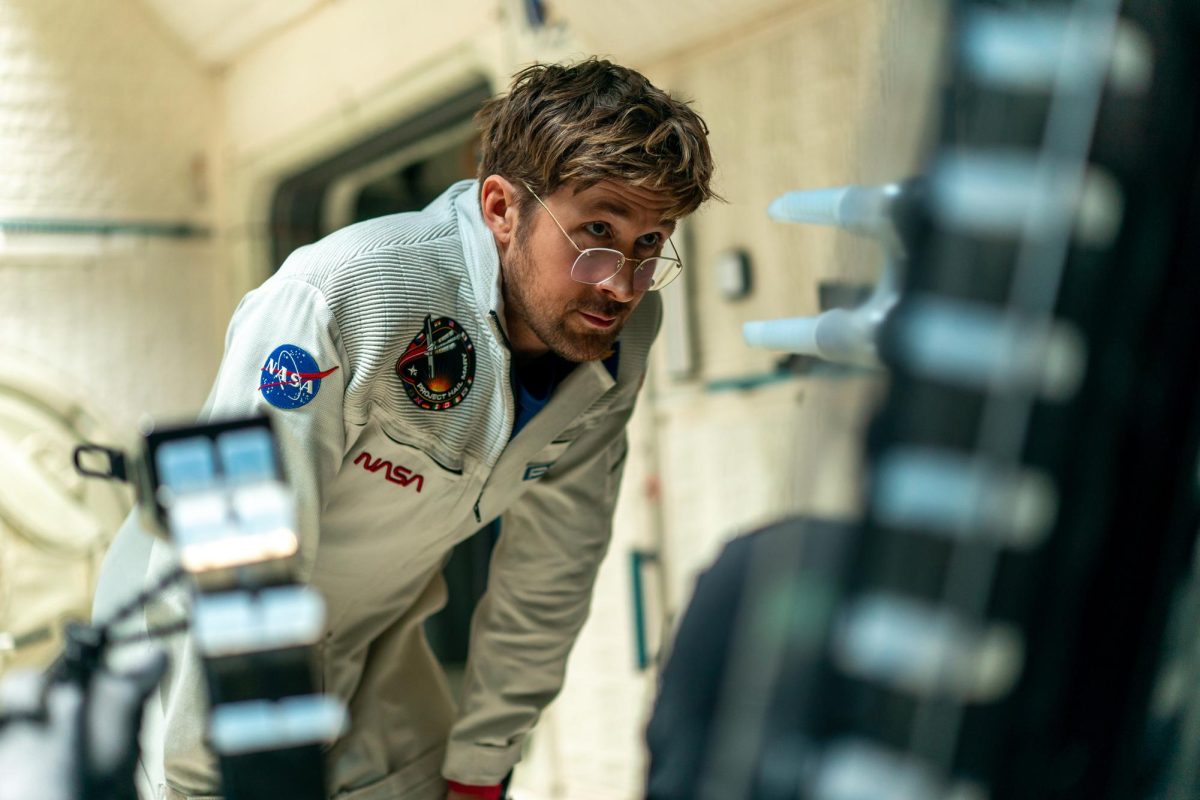


Despite having made three feature-length films in three years — “Poor Things” (2023), “Kinds of Kindness” (2024) and his latest “Bugonia,” released Oct. 31 — acclaimed filmmaker Yorgos Lanthimos’ talent has only sharpened and improved. A remake of the South Korean film “Save the Green Planet!” (2003) directed by Jang Joon-hwan, “Bugonia” is one of the best and most memorable films of the year.
“Bugonia” follows Teddy Gatz (Jesse Plemons), a beekeeper whose obsession with conspiracy theories has him convinced Michelle Fuller (Emma Stone), the CEO of a pharmaceutical company Auxolith, is secretly an alien whose mission is to destroy Earth. He, along with his cousin Don (Aidan Delbis), kidnaps Michelle and intends to hold her hostage in their basement for four days until the lunar eclipse, when Michelle will be able to contact her mothership due to it becoming undetected.
The film grabs the audience’s attention immediately, beginning with documentary-like footage of bees as they pollinate, and Teddy calmly explaining to Don how the “Andromedans” (the alien species) have killed their family and are intending to destroy all of humanity. The film proceeds to perfectly contrast their mundane, unhappy lives with Michelle’s. While Michelle lives in a multimillion dollar mansion, Teddy and Don live in a beaten-down house in the middle of nowhere. While Michelle works with a trainer and runs on a treadmill in her gym with an oxygen mask, with not a single hair out of place, Teddy and Don are all alone, using T-shirts as mats to stretch and looking like they have not showered in years. The subtle changes in tone and cinematography excellently highlight the differences not only for the characters, but for the two worlds the characters live in.
Once Michelle is kidnapped, Teddy and Don shave her head to prevent her from contacting her mothership. Stone’s performance shines as the viewers watch Michelle attempt many forms of escaping, from bargaining to “admitting” to being an alien, all to no avail. Don begins to question Teddy and his beliefs, feeling sympathy for Michelle, causing Teddy to prohibit Don from speaking to her.
Some of the greatest scenes in the film are set around the exchanges between Teddy and Michelle. While Teddy tries his best to remain calm, Michelle purposefully provokes him. Teddy finally cracks when Michelle brings up his mother Sandy (Alicia Silverstone). It is revealed through black and white flashbacks that Sandy struggled with an undisclosed illness and Auxolith put her on experimental drugs that led to her going into a coma. One of the most powerful scenes in the film is when Sandy is shown with dozens of large needles injected into her skin, telling Teddy to never trust companies like Auxolith, all while Teddy, delicately and desperately, tries to take out the needles from her body.
Lanthimos is known for his grandiose directorial style, making absurdist and experimental films for over 20 years. Some of his most acclaimed and popular work includes “Dogtooth” (2009), “The Lobster” (2015), “The Killing of a Sacred Deer” (2017), “The Favourite” (2018) and more. His sharp and precise direction, utilizing the tension and uncomfortable tone he sets to tell the story in the most unique way possible, is a common feature for all of these films, shown most impressively with “Bugonia.”
Stone — who has collaborated with Lanthimos since “The Favourite” — gives one of the best performances of her career thus far as Michelle, bringing a calm confidence to the character, highlighting her performative nature and her struggles with alienation. Plemons gives an outstanding and memorable performance as Teddy, a man whose trauma manifests itself into something that seeps under the audience’s skin.
Every member of the small ensemble has a moment to make its mark on the viewer. Delbis, in his feature film debut, brings a sensitivity to film that is shattered in his explosive final scene. Comedian Stavros Halkias plays local police officer Casey, who is more focused on being forgiven by Teddy for molesting him when they were younger than doing his job.
The cinematography by Robbie Ryan is one of the most impeccable aspects of the film. Contrasting its muted colors with a mixture of inventive wide angles and close-ups, the film’s visuals are among the most memorable of the year.
The score by Jerskin Fendrix — who previously worked with Lanthimos on “Poor Things” and “Kinds of Kindness” — is one of the best scores of the year. The music seamlessly transitions from orchestral wonders to ferocious crescendos when the tension itself explodes, leaving an impression in its wake.
“Bugonia” is written by Will Tracy, known for his work on the film “The Menu” (2022) and the television show “Succession” (2018-23). His writing is as intense and humorous as ever, writing a script fully fleshed out and leaving the audience in awe of what they just witnessed.
“Bugonia” is a powerful metaphor for capitalism because Teddy blames Michelle for the entirety of the world’s problems. Michelle herself represents greedy capitalists who take advantage of the poor and the struggling while disguising their actions as important and meaningful.
One of the best films of the year, “Bugonia” perfectly captures the erratic and tragic nature of those who struggle under the overwhelming weight of capitalism, as well as the nature of capitalists who are so greedy, they might not even be human.