
The summer before the 2024 election, the U.S. was facing big changes and big questions. It seemed as though everyone was asking about the future of the country: where will we go, what should we do? In an effort to address the unrest and social dissatisfaction, a large team of creators discovered and manifested a path to find the answers. Together.
Through this period of great perceived difference and polarity, our music-driven short film, “Somewhere Together,” challenges our perception of community. It recommends that we look past layers of social imaginaries and recognize that beneath physical, ideological, racial and sexual differences is a common pursuit for life, liberty and happiness.
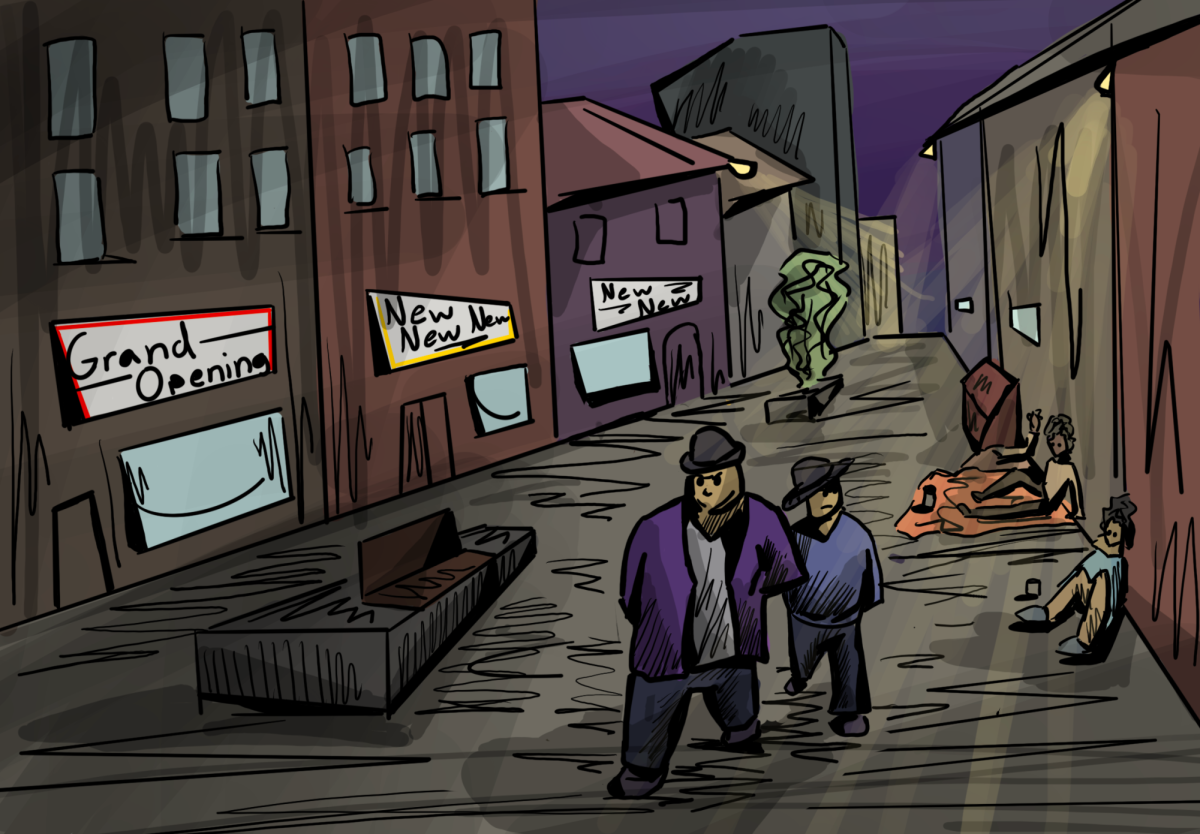
Our 30 minute anthropological, ensemble film uses an apartment building to metaphorically depict the social order created by “social imaginaries,” which is an idea that we accept to allow social cooperation and coherence. For example, we accept that people with police badges can enforce authority, red signs mean stop, there is no school on the weekends, and the list goes on. These social imaginaries, while creating a functional society, can also create great dissonance and harmful hierarchies. Patriarchies tell men to treat women as less capable. President Donald Trump demands that citizens treat immigrants as criminals. It creates a divisive status quo built on social imaginaries; ideas we have made up to create order.
In the film, we jump into five different apartments, each on its own floor, representing a generalized population that we socially outline: people with disabilities, Black Americans, Latine immigrants, Indigenous peoples and the economic 1%. Every room explores how intersectional identities can create conflict within communities. Each story is seemingly boxed into a separate plot line until a fire erupts on the ground floor and the narratives combine, thus rejecting the division informed by social imaginaries.
It is important to note that the development, design and reality of these apartments was led by five co-writers and co-directors who share the lived experiences of each community. This creative leadership, though abnormal, forced us to do what we are asking viewers to do: confront our unconscious social relationships to recognize that we are all people struggling to survive. Moreover, we need each other to survive. And this is not a new idea. Humans have forever formed groups, tribes and societies to ease the strife of living. Eventually, we implemented social imaginaries as a way to recognize these groups and give structure to our societies. In our hyper-individualistic country that lacks homogeneity, there are many ways to imagine yourself against others. Along the way, I fear that we lose our sense of collective identity and camaraderie.
The conflicts within each apartment spotlight tension and discomfort within a private setting surrounded by like-minded people who care deeply about each other. Even in these spaces, we can disassociate from our similarities and allow our differences to create unnecessary conflict. This exposes why analyzing intersectional identities is so important; it roots out layers of oppression and privilege within set groups. It takes pulling back the layers of difference and breaking down how social norms have influenced your perspective to realize what we share as humans.
Unlike other student theses, this film lives within a social-impact campaign. Beginning the summer of 2026, we will use the film as a platform for public discussions about the diversity of American realities. Along the way, we hope to give people a safe place to be uncomfortable, where they can challenge their social understanding and learn more about the experiences of the people within the communities depicted and present in the audience — the people who, despite their differences, share the privilege of calling themselves Americans. Follow us @somewheretogether_film for updates and opportunities to challenge yourself.
It has been a year since the 2024 election, and yet we are still questioning what to do and where we will go. I would suggest that the first step toward strengthening our community is acknowledging that we are one. The hardest part of that becomes stepping out of the comfort that comes within social order especially ones that may privilege you. But I believe we are all brave enough to be uncomfortable. And the truth in the matter is we do not have a choice. Whether we like it or not, we are all going somewhere together.