
4.5 out of 5.0 stars
Three years after the release of the independent horror video game “The Exit 8,” film director Genki Kawamura released the Japanese adaptation “Exit 8” in the U.S. on April 10, eight months after a successful theatrical run in Japan.
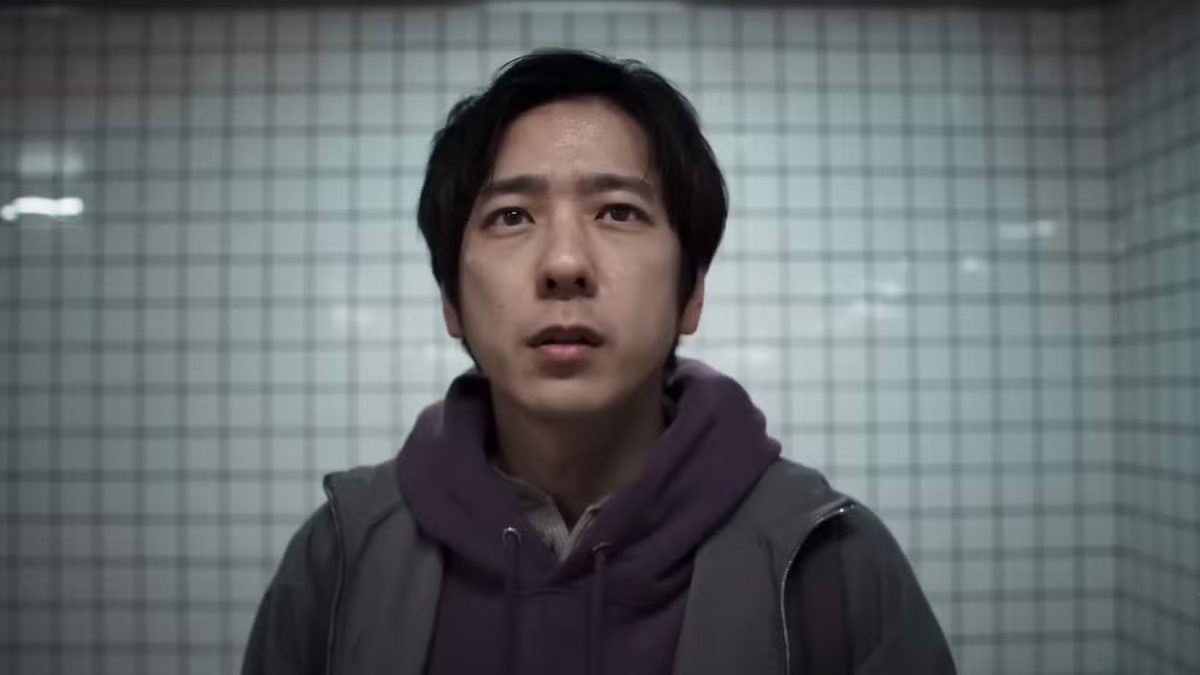
The adaptation follows The Lost Man (Kazunari Ninomiya), who finds himself inexplicably trapped in a seemingly never-ending looping corridor while he attempts to leave an unknown subway in Japan. His only hope of leaving is by following the liminal instructions presented on a wall: only proceed through the corridor if no anomalies are found; if anomalies are found, turn back immediately; and to only exit through the titular Exit 8. An anomaly, in one scene, is shown as The Walking Man (Yamato Kochi) — who typically ignores The Lost Man and walks through the passageway without stopping or speaking — follows The Lost Man instead. In another, the corridor’s lights go out, and the hallway becomes infested with rat-like creatures containing human body parts. If The Lost Man makes any mistakes, his progress resets, and he finds himself at the beginning, Exit 0, once again.
Though the story risks becoming repetitive, the fast pace and constant reinvention leaves the viewer riveted. The screenplay, written by Kawamura and Kentaro Hirase, takes innovative turns and ingeniously changes the character the viewer follows at multiple points in the story. The perspectives of The Lost Man, The Walking Man and more give viewers a broader understanding of the horrors any character in this world can go through.
Ninomiya, as The Lost Man, heightens themes of loneliness and isolation through his incredible performance. His character’s arc — learning to accept becoming a father despite never having one himself — is the heart of the entire film, and would falter under a less capable actor’s talent. Kochi is also wonderful as The Walking Man, managing to give a character with minimal depth a mighty presence.
A highlight of “Exit 8” is the immaculate production design. With the exception of the first and last five minutes and a dream sequence, the film takes place in the same repeating corridor. The passageway is composed entirely of white tiles, besides a walkway with yellow tiles and adorned with five posters, three doors, two vents and other strange items. Because the set is so perfectly detailed, every anomaly becomes a striking feature for the character and viewer.
Keisuke Imamura’s cinematography enhances the sense of claustrophobia and stress. Imamura shot the first five minutes from the point–of–view of The Lost Man, finally cutting once he realizes he is lost. This inventive choice not only puts the audience in his shoes, but also makes the film feel more like the video game, transforming into its own art form.
Yasutaka Nakata and Shouhei Amimori created a superb score that rings haunting and noteworthy. The two composers established musical cues that play at specific moments, like when the loop resets. In a memorable scene, The Lost Man, after accidentally resetting his progress, finds himself in the now yellow-shaded corridor (an anomaly), shrieking and vomiting in panic while the score blares violently.In a notable scene, two characters question whether they are being trapped and tortured for a specific purpose. Is it because they made questionable decisions? Do they feel guilty for actions the viewer never learns about? Is it because they lack the courage needed to help others? In “Exit 8,” the reasoning as to why these characters are victims of mysterious circumstances goes unexplained. This only adds levels of intrigue to the film and makes it one of the most mesmerizing and best of the year.